Mystery of 'magnificent palace' found in Jerusalem.
EPA
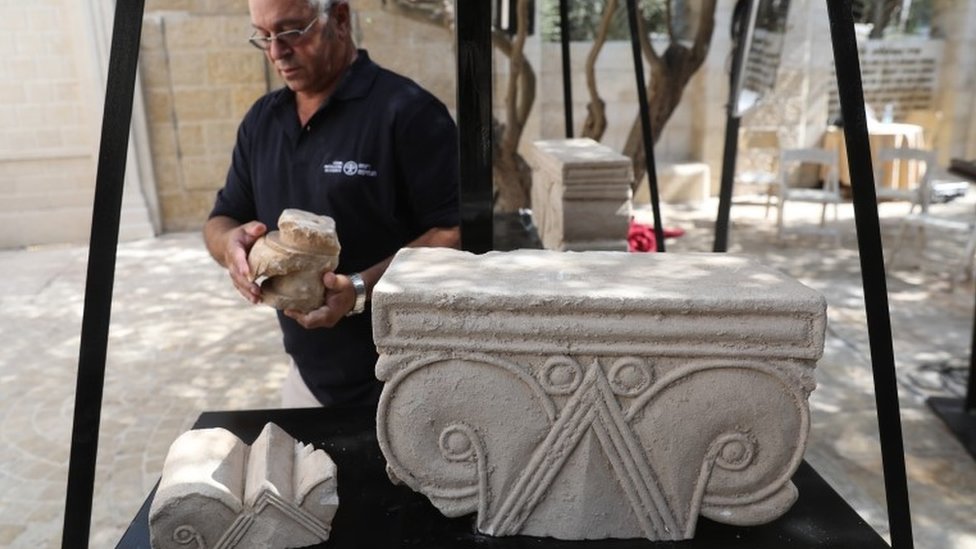
Israeli archaeologists have discovered what they say is evidence of a "magnificent" palace from the era of a Biblical Jewish kingdom in Jerusalem.
Elaborately carved stone structures and other relics associated with such a building were found about 3km (2 miles) south of Jerusalem's Old City.
The archaeologists say some of the artefacts had been neatly buried, although they do not know why.
The palace is thought to have been built around the 8th or 7th Century BC.
Among the remains unearthed in what is now the East Talpiot neighbourhood, also known as Armon Hanatziv, were three ornate stone capitals - carvings which adorn the top of columns - as well as items from lavish window frames.
"The column capitals, identified with royal construction of the First Temple period [10th-6th Century BC], are the most beautiful and impressive that have been uncovered to date," said a statement from the Israel Antiquities Authority (IAA).
EPA
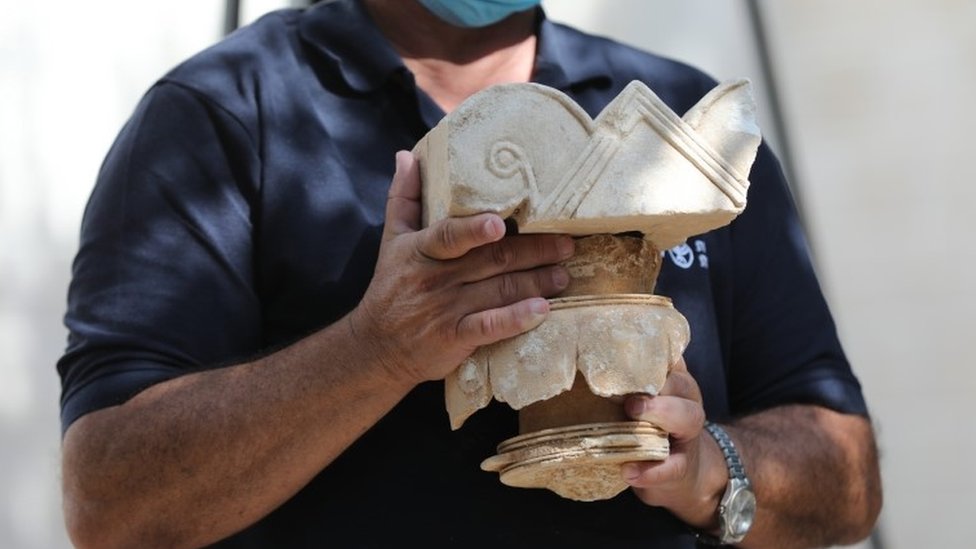
The IAA expressed "great surprise" that two of the three capitals were found "neatly buried, one on top of the other".
"At this point it is still difficult to say who hid the capitals in the way they were discovered, and why he did so," said Prof Yaakov Billig, director of the excavation, "but there is no doubt that this is one of the mysteries at this unique site, to which we will try to offer a solution."
Prof Billig said the grand building was probably destroyed during the Babylonian conquest of Jerusalem in 586 BC.
YANIV BERMAN/ISRAEL ANTIQUITIES AUTHORITY
The IAA said whoever lived in the "monumental" structure would have had a "breathtaking" view of an area now known as the City of David, or Wadi Hilweh in Arabic, and of the Jewish Temple on a holy plateau known to Jews as the Temple Mount and Muslims as Haram al-Sharif.
The occupants could have been one of the kings of Judah or the wealthy family of a nobleman, the IAA suggested.
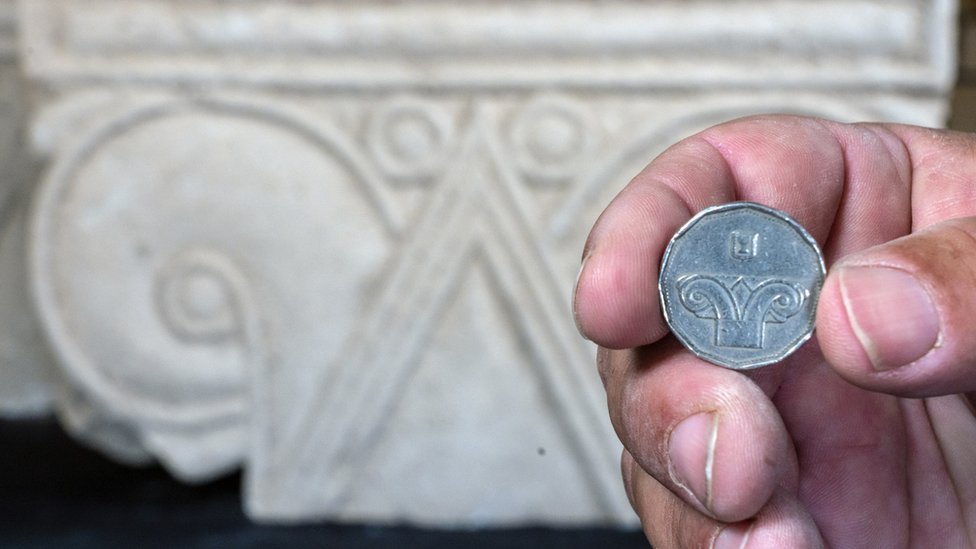
The carvings adorning the capitals, the IAA pointed out, were a known visual symbol of the period of the Kingdoms of Judah and Israel, and appear as one of the motifs on the five shekel coin of the modern State of Israel. BBC News.


